BIOGRAPHY
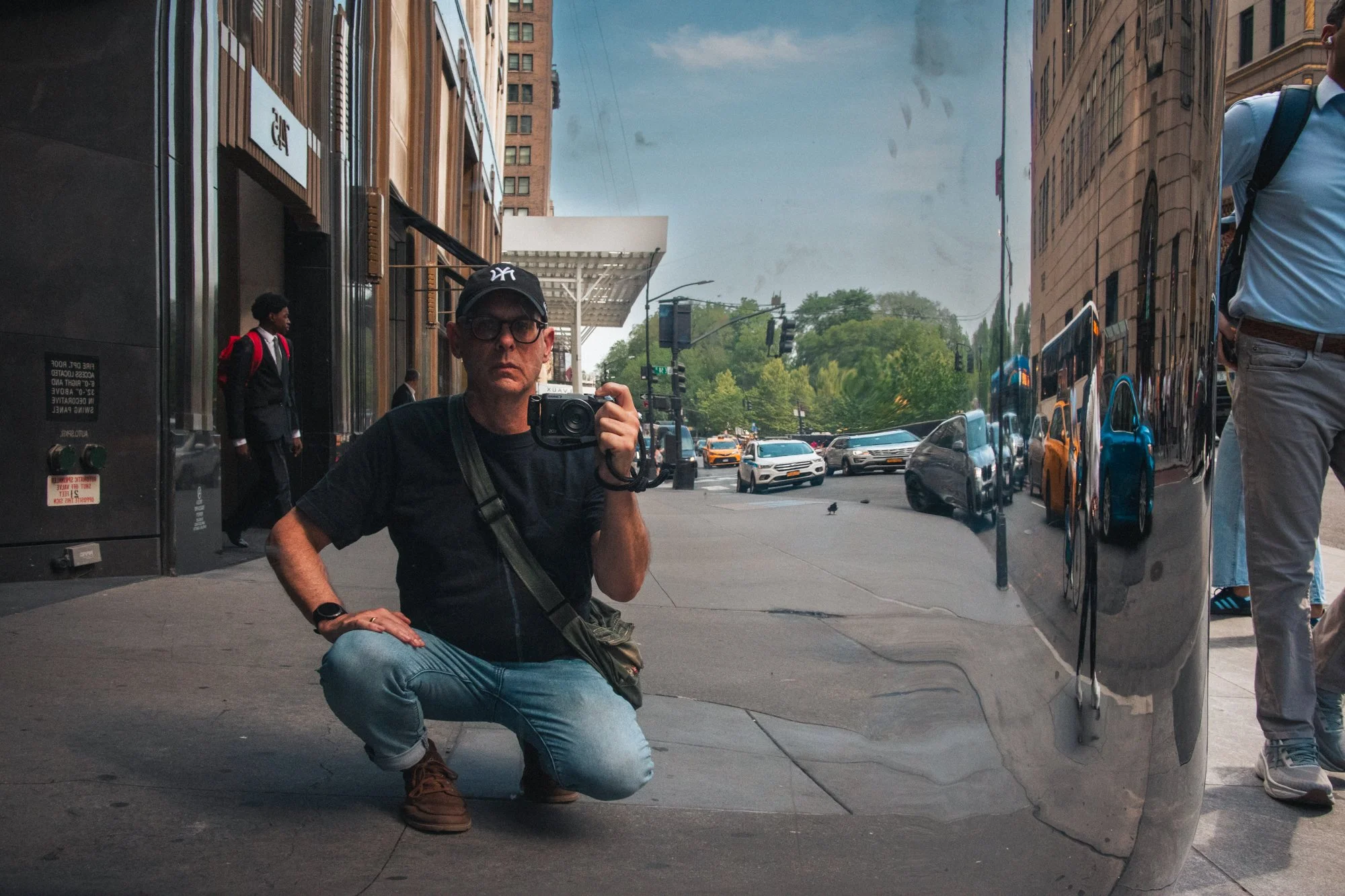
Daniel Flahiff (b. 1966, Los Angeles, CA) received his Master of Fine Arts degree at Art Center College of Design in Pasadena, CA in 1997 where he studied under Mike Kelley, Stephen Prina, and Jeremy Gilbert-Rolfe.
Flahiff has been the subject of solo exhibitions at the LA Times Theater, Art Center College of Design, Pasadena, CA; Freespace Gallery, Seattle, WA; and the School of Visual Concepts Gallery, Seattle, WA.
His work has been included in group exhibitions at at the Royal Melbourne Institute of Technology, Melbourne, Australia; Röda Sten, Göteborg, Sweden; Botkyrka Konsthall, Stockholm, Sweden; FRAME, Copenhagen, Denmark; The Pilot Space, Auckland, New Zealand; Glowlab, Brooklyn, NY; Three Day Weekend, Los Angeles; and the Bellevue Arts Museum, Bellevue, WA.
Flahiff’s work is held in private collections in Los Angeles, New York, Munich, London, and elsewhere.
In 2024, Flahiff’s short documentary film “Dad Bod” was awarded Best Documentary at the Oregon Documentary Film Festival.
Flahiff lives and works in NYC.

ARTIST’S STATEMENT
My practice moves fluidly between painting, photography, film, drawing, and installation. I begin in the streets, working with a mirrorless camera to capture fleeting moments — gestures, fragments, and collisions of light within the city’s daily life. These images are gathered quickly, using natural light and minimal intervention.
At times this photographic process produces cohorts that stand alone as a body of work. Other times, I extract stills, sequences, and textures that become foundations for further work. In the studio, I translate these photographic traces into layered surfaces through paint, mixed media, and manual manipulation. Pigment is applied in layers — brushed, scraped, sanded, and reworked — until the surface carries both accumulation and erosion. I allow textures, seams, and transparencies to remain visible, so that the history of making stays on the surface.
Each piece develops through cycles of construction and abrasion, revealing the image’s structure rather than concealing it. Materials like graphite, paper, and acrylic medium intermingle with photographic transfers and traces of drawn line. The result is not a polished surface but a heavily worked one. An image that holds evidence, built from the residue of observation and touch.
My vocabulary explores Abstract and Minimalist traditions—from Kline and Mitchell to Newman and Martin—and reaches back through a lineage of artists who weave faith and transcendence into their work, like Kandinsky, Rembrandt, and Fra Angelico—reinterpreting and extending their questions of form, presence, light, and inner space for our time. I pursue this through a posture of redemption: to see the city as a body, not a battleground, and to tend to its aesthetic and spiritual wounds. In this way, I explore both urban space and work in my studio as sacred encounters, where each image becomes not just a picture but a potential vessel of grace.
-Daniel Flahiff, 2026